FAQs
-
Babywearing is safe from birth for a healthy baby born at full term. For premature babies or babies who are medically complicated it is important to consult with the baby’s care team for clearance.
-
When your baby is awake and alert, they will communicate with you and you should remain responsive to your baby’s cues. There will be natural breaks in any given carrying session, for nappy changes, feeding etc. However if your baby is comfortable and content and/or sleeping and an amount of time has passed, there is no need to take your baby out due to an arbitrary time limit. Also please be sure to check in with your own body and your own fatigue and use that to guide your choice to keep carrying or to end the session for a break. This is especially true if you are the birth parents and in the early post partum weeks.
-
Yes! Babies love the movement, closeness and gentle compression given by the carrier or sling. When your baby is carried on you in a carrier or sling they feel close to you, they can sense your body through their smell, hearing and touch. Being near you signals safety to their brain, and allows them to relax and settle, very often sleeping there on you - warm and snug.
-
Babywearing and breastfeeding are two complex skills. These two skills should only be combined when one feels they have mastered both separately. Combining these skills is a third complex skill which will also take time to master. It is very important that after active feeding is finished in the carrier or sling (baby is no longer swallowing milk) the baby must be repositioned and retightened.
-
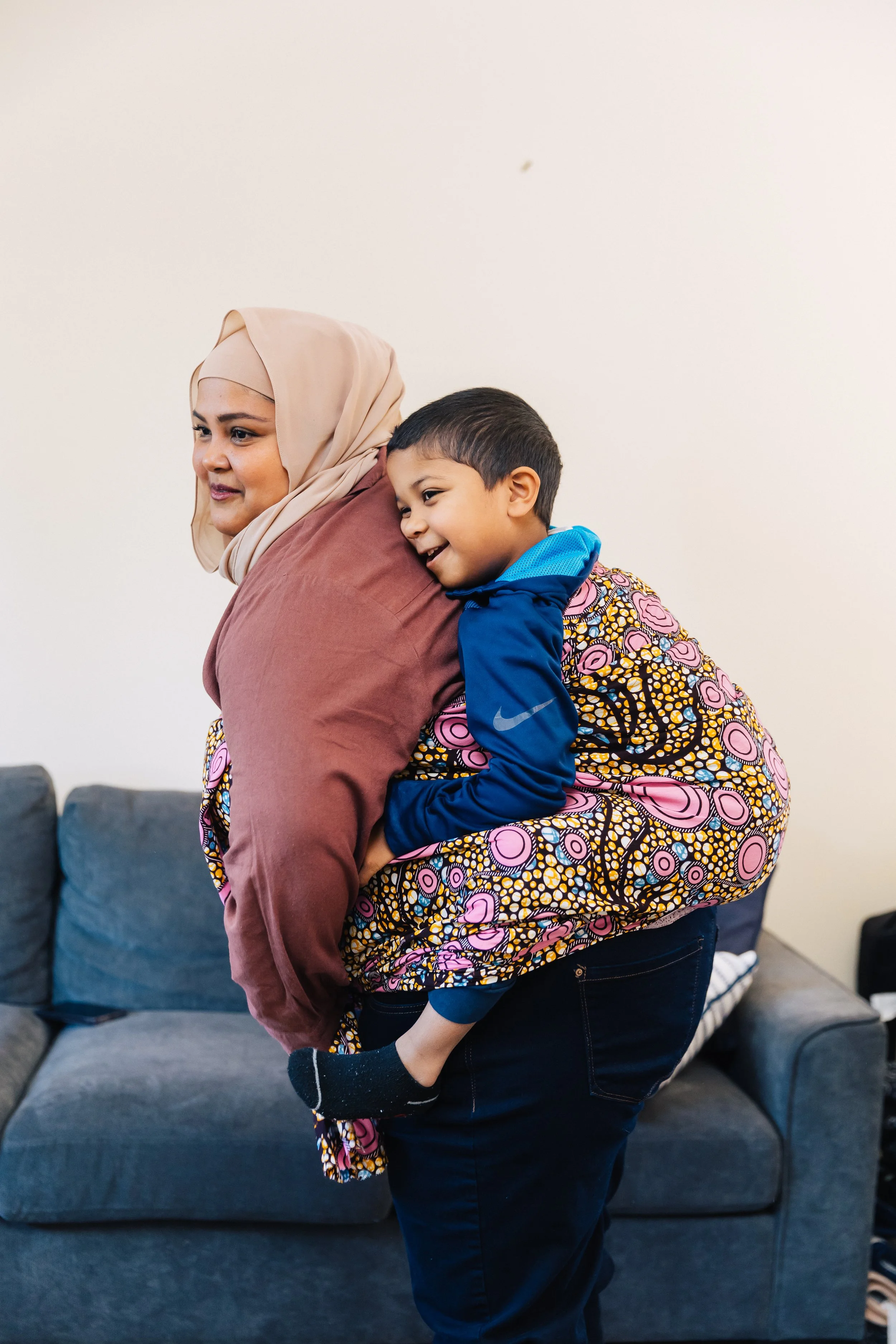
This depends on a few different factors. You should consult your carrier’s instructional manual as there will be clear limits on the weight capacity of your carrier. There are toddler carriers and even preschool carriers if you wish to continue carrying your child beyond infancy.
-
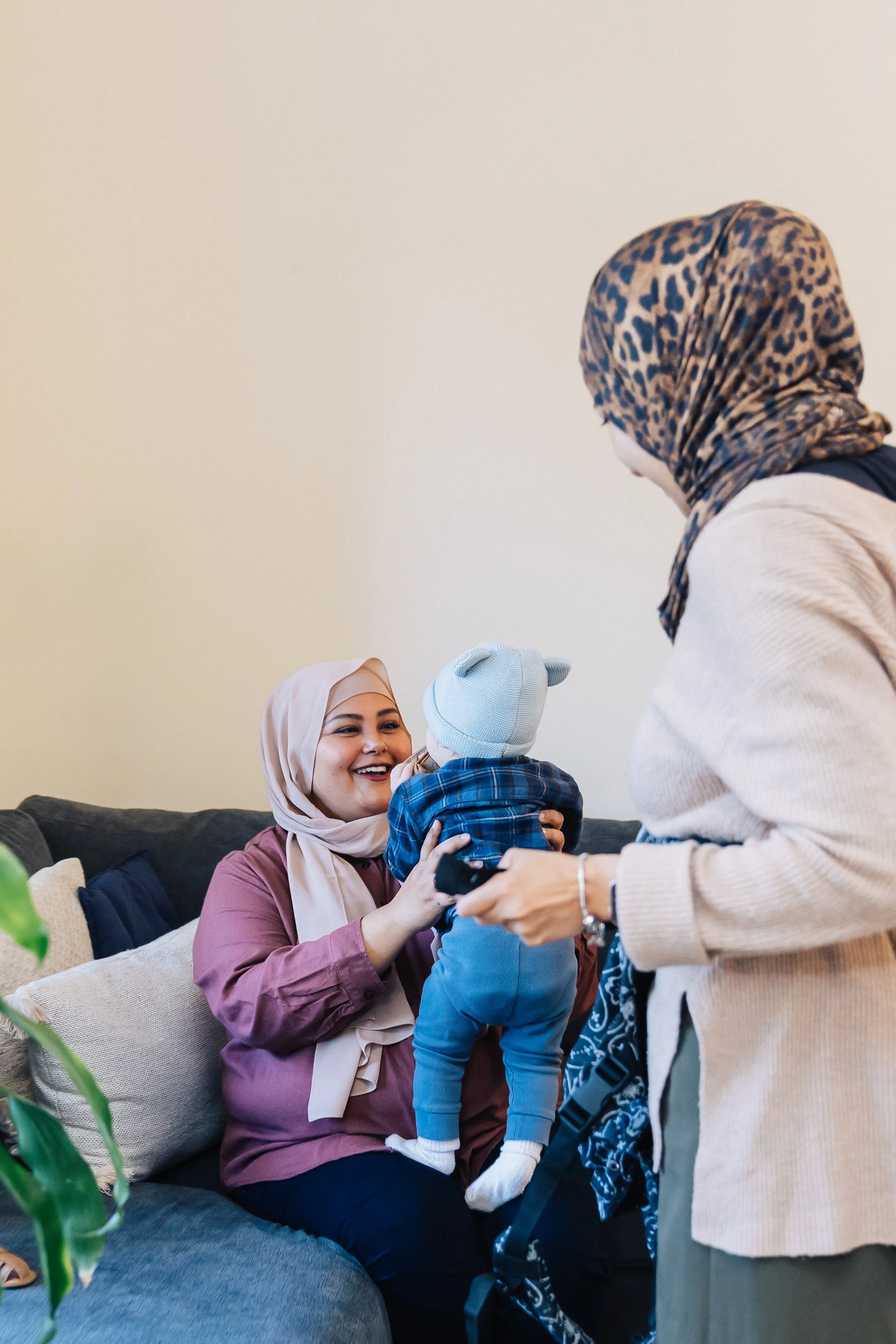
If you are interested in babywearing and you are pregnant, now is a great time to seek support from a Babywearing Educator.
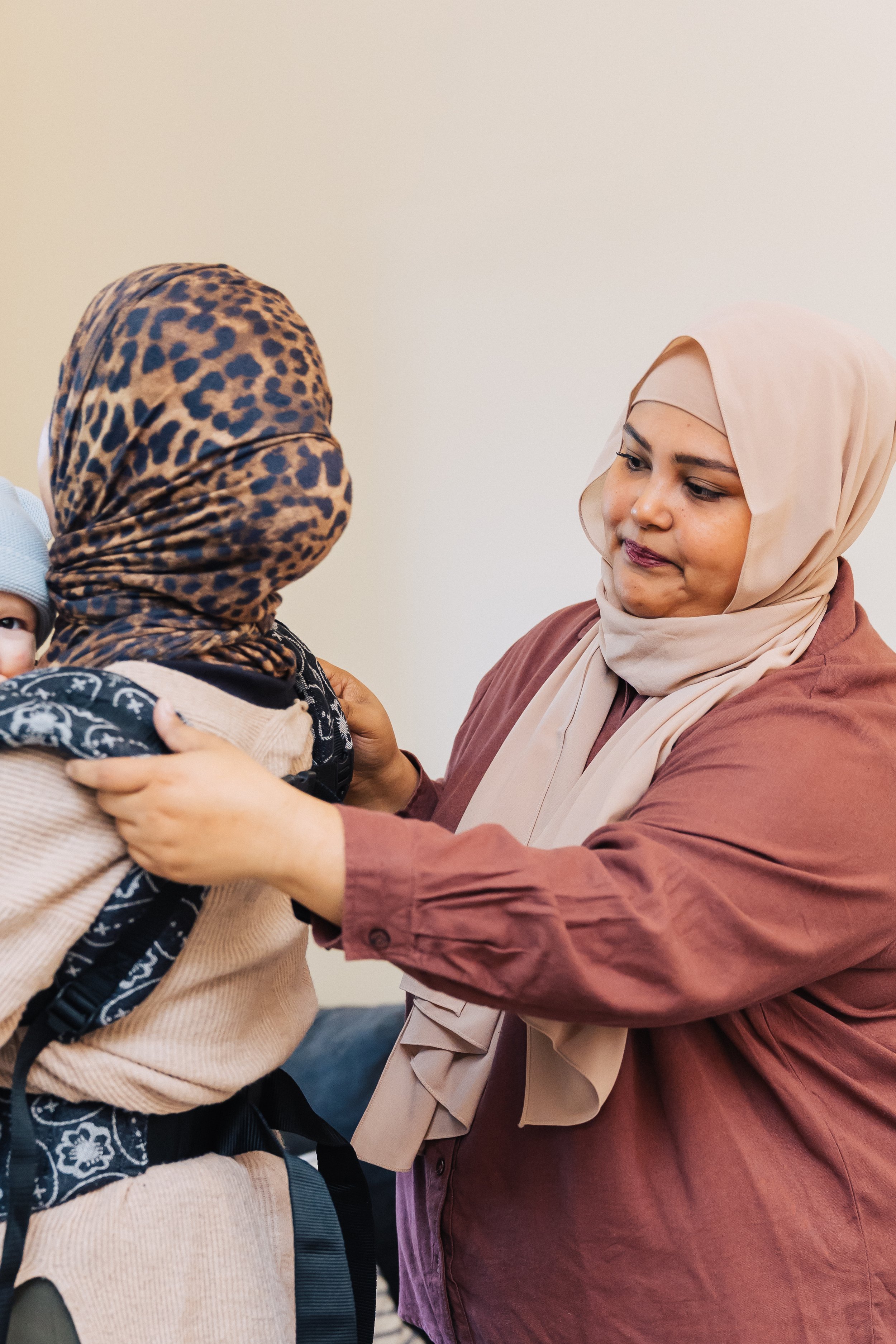
You can try on a few different options and learn about positioning and ergonomics and feel confident to wear your baby in the early weeks after birth. If you already own a carrier but it is not comfortable or you are concerned that your baby’s body is being supported well, seek support from a Babywearing Educator. If your baby seems upset or uncomfortable in the carrier that you own, seek support from a babywearing educator and they can help you identify ways to improve the fit.
Babywearing is for every body and every parent and care giver. Keeping your baby close has numerous benefits for both parts of the dyad. You deserve to experience joyful, comfortable and confident babywearing.